
Suno Bridge Tag Guide: How to Use [Bridge] for AI Music
Mastering the Art of Contrast
Tired of predictable AI songs? The [Bridge] tag is the ultimate tool for engineers building professional music. Whether you’re creating a detour for a pop anthem or a structural shift for a cinematic piece, the AI music Bridge will turn predictable loops into polished, studio-quality tracks. You don’t have to include one, but a well-prompted Bridge can make the Final Chorus feel like a huge, emotional payoff.
Stop wasting your credits on boring, repetitive songs. Instead of letting Suno endlessly repeat the same loop, you’ll decide exactly when to change up the sound and pivot the song in a new direction.
Where Bridges Belong in Your AI Song
In most modern songs, the Bridge pops up right after the second Chorus, following the standard Verse 1-Chorus-Verse 2-Chorus-Bridge pattern. By that point, your listeners have heard the main Hook and the Verse melody twice, so their brains are starting to get a little too comfortable with the pattern. The Bridge is there to shake things up before the Big Finale. While this is the way most hits work today, older Jazz and early Rock songs did things differently—they usually put the Bridge right after the second Verse because those songs didn’t even have a traditional Chorus to lean on.
The Bridge is a one-time detour designed to break the repetitive cycle of the Verse and Chorus, redirecting the listener’s ear before the final surge of energy.
AI Bridge vs. Breakdown
| Feature | [Bridge] | [Breakdown] |
| Primary Goal | Melodic/Harmonic Detour | Subtractive Energy Reset |
| Placement | Usually after 2nd Chorus | Anywhere for dynamic contrast |
| Feel | A “New Chapter” in the story | A “Deep Breath” or “Collapse” |
Pro Tip
Understanding Bridge Tags
Syntax is the key to professional song renders. Because Suno reads each input box differently, your tagging strategy must adapt to where you’re placing the code.
The Square Bracket Rule
- Lyrics Box: Commands require [Brackets]. Without them, the AI will attempt to sing your instructions as lyrics.
- Styles Box: Commands must be bracket-free. Adding brackets here can cause the model to ignore your genre or glitch the generation entirely.
Preventing Chorus Bleed
The AI often drags the melody from the Chorus directly into the Bridge, making the transition feel muddy.
Directly following your Break tag, insert a new line containing your Style: New Style instruction, then add an empty line below it to finalize the transition. This forces the AI to completely abandon the old melody. A clean break allows the new rhythm and atmosphere to fully establish itself before the vocals return.
The Pocket Lock Hack
How to prevent vocal overlap in an AI music bridge: Add two or three empty lines before your lyrics begin again. This forces Suno to commit fully to the instrumental relationship, preventing the singer from entering too soon.
Drum Syncing: Adding even more extra lines after the Bridge gives the AI space to execute a Glitchy Drum Fill or a Filter Sweep without trying to compete with the vocal track.
Copy, Paste & Personalize
Copy & Paste: Click the Copy button on the Pink Box to grab the structural tags, then paste them directly into the Suno Lyrics Box.
Customize Variables: Once pasted, replace the tags with your own specific ideas. For example, you might swap a Double-time Bridge for the generic Bridge or a Drum Break instead of a basic Break.
Add Your Content: Finally, insert your lyrics and add any remaining Intro, middle, and Outro tags to complete your track.
The Universal AI Bridge Template
LYRICS BOX
[Chorus]
Your lyrics block here...

[Break]

[Bridge]
[Instrumentation: Featured Instrument]
[Vocals: Modifier]


[Final Chorus]
Your lyrics block here...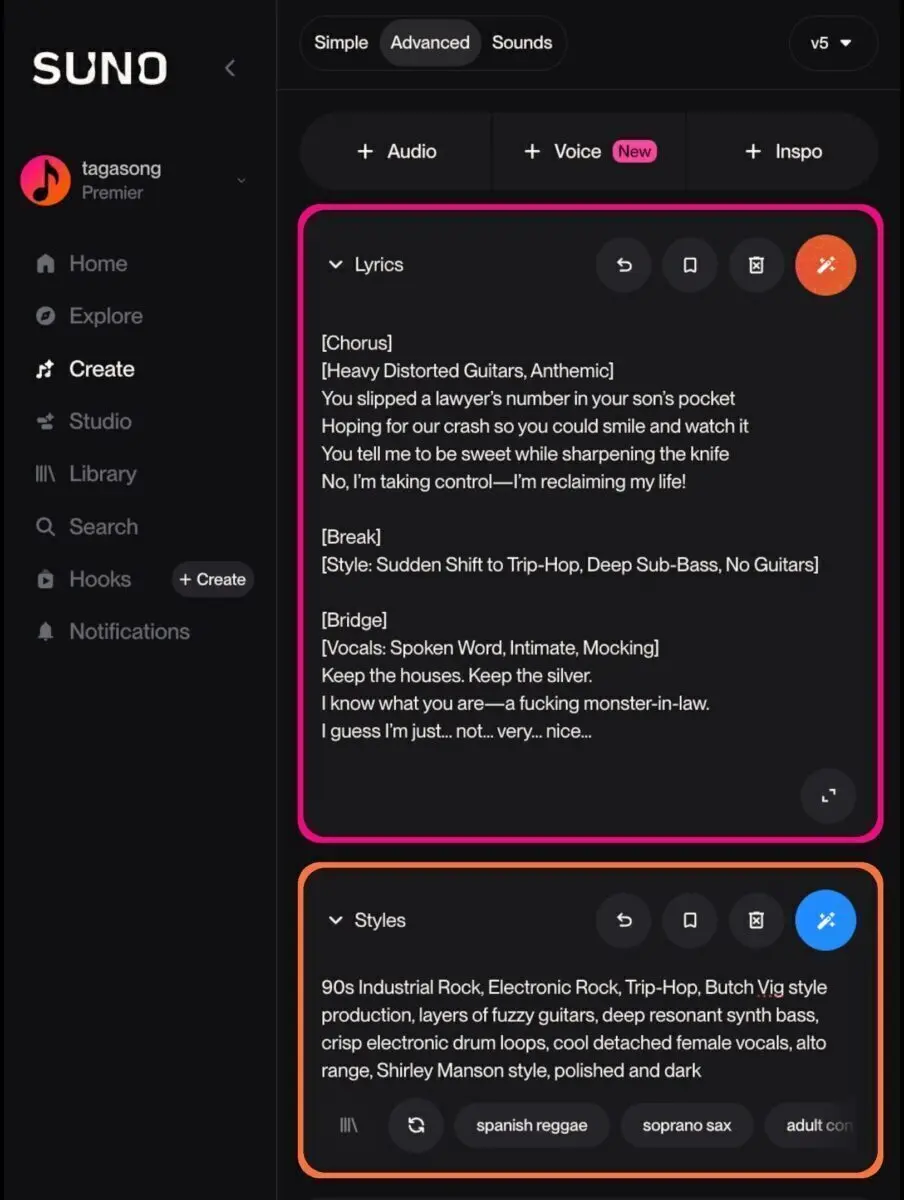
When NOT to Use a Bridge
While a powerful option, a Bridge isn’t always the right move. Explicitly omitting a Bridge structure in your AI prompts is often necessary to stay true to specific genres or to respect the constraints of short-form content.
- AAA Structure (Strophic Form): Common in Folk and Hymns, this form repeats the same musical theme for every stanza without ever breaking into a contrasting Bridge.
- Ambient & Drone Music: These genres rely on a continuous, immersive flow; a jarring structural shift like a Bridge can break the listener’s meditative state.
- Hip-Hop / Mixtape Style: Short, punchy tracks (often under 2 minutes) frequently stick to a Verse-Hook-Verse-Outro sequence to encourage maximum replayability.
- Punk Rock: To maintain high velocity and brevity, aggressive punk tracks often skip the Bridge entirely, rushing from the second Chorus straight to a chaotic finish.
- Loop-Based / House Music: In strictly Groove-based genres, the structural relief usually comes from a Synth Build or subtle rhythmic variations rather than a formal melodic Bridge.
If you’ve decided your track needs a structural shift or a new emotional peak, explore our ranked Bridge tags below to find the perfect transition.
Browse the cards to find your vibe, experiment with different categories, and see how they transform the arc of your AI music!
Ranked [Bridge] Tag List
Choose Your Musical Detour
Standard Bridges
Standard Bridges appear in nearly half of Verse-Chorus songs to provide essential contrast.
[Build-Up Bridge]
High-popularity in Pop / EDM; starts quiet and uses risers or snare rolls to peak at the Final Chorus.
[Middle 8]
The absolute industry standard; an 8-bar section with a new melody and lyrics that breaks repetition.
[Emotional Bridge]
A poignant segment focused on vulnerability, often stripped down to a mellow piano or a solo acoustic guitar with soulful vocals.
[Melodic Bridge]
Centered on a new, catchy hook or lead melody that contrasts with the song’s main theme.
[Key Change Bridge]
A modulation (usually higher) that lifts the energy intensity for the Grand Finale.
[Interlude]
A brief, often instrumental section offering a moment of reflection or sonic contrast, utilizing atmospheric textures or a Solo melody.
[Transitional Bridge]
A short, functional linking segment (often 2-4 bars) designed purely to transition between blocks.
Technical Bridges
Technical Bridges change the feel of the song for a moment to catch the listener off guard.
PRO TIP
In the streaming world, silence is risky. For a False Ending, keep the silence between 1.5 and 2 seconds. Any shorter and it sounds like a glitch; any longer and people will skip the track. Drop a [Sub-bass Impact] tag right after the pause to shock the listener’s brain and let them know the song isn’t over yet.
[Ambient Bridge]
A reverb wash or drone section that removes all structure to create a cinematic feeling.
[Distorted Bridge]
Pushes the instruments or vocals into a gritty, overdriven sound to create a raw and aggressive departure from the rest of the track.
[False Ending]
Mimics the end of the song with a long fade or silence, only to explode back into a Final Chorus.
[Experimental Bridge]
Breaks traditional harmony using Dissonant chords and atonal electronics.
[Blues Turnaround]
A specific harmonic reset for the 12-bar Blues progression. It creates an unresolved feeling that demands a return to the Verse.
[Time-signature Pivot]
Changes the meter from 4/4 to 3/4, common in Math Rock and Progressive Jazz.
Dynamic Bridges
Electronic, Club, Rock & Metal use Dynamic Bridges to shift intensity.
PRO TIP
For [Half-time] or [Double-time] Bridges, use commas to slow down the vocal delivery or hyphens to speed it up. Suno interprets punctuation as a clock modifier—commas create the sluggish, heavy feel needed for a Breakdown, while hyphens force the rapid-fire syncopation required for a double-time sprint.
[Atmospheric Bridge]
A sudden energy drop with ambient pads and minimal percussion; extremely popular in modern production.
[Stripped-back Bridge]
Removes drums and bass, leaving only a single instrument and the vocal. Specify the lead instrument to remain: [Stripped-back Piano Bridge]
[Half-time Bridge]
Slows the perceived tempo; a staple in Metalcore and Dubstep for heavy rhythmic impact.
[Crescendo Bridge]
A gradual increase in intensity, layering instruments to a fortissimo peak.
[Explosive Bridge]
A high-energy section hitting immediately with crashing cymbals and distorted guitars.
[Orchestral Swell]
A cinematic transition where strings and brass rise to a dramatic peak.
[Dramatic Bridge]
Characterized by staccato hits, theatrical vocals, and sudden silences.
[Double-time Bridge]
A rhythmic pivot where the perceived speed of the song doubles.
[Rhythmic-shift Bridge]
A section that changes the time signature (e.g., from 4/4 to 6/8) or feel (e.g., from straight to swing).
[Slow-motion Bridge]
A section where the tempo significantly decreases, often featuring stretched audio effects or sluggish drum beats.
Vocal-Centric Bridges
Urban, Rhythmic & Traditional genres use these to focus on vocal flow.
PRO TIP
For narrative Bridges, use the your lyrics to shift the perspective. If the Verses are about the past and the Chorus is about the feeling, the Bridge should be about the future or a revelation to keep the user engaged in the story arc.
[Rap Bridge]
Currently the most popular special feature in Pop music, introducing a rhythmic spoken flow.
[Ad-lib Bridge]
Strips away complex lyrics, focusing on “Oohs,” “Aahs,”, “Ooh”, “Na na na” or a “Yeah” or rhythmic chanting to reset the energy.
[A Cappella Bridge]
All instruments stop, leaving only layered vocal harmonies for maximum vulnerability.
[Whispered Bridge]
Low-volume, breathy vocals creating an intimate or Close-mic texture.
[Gang Vocal Bridge]
A high-energy punk or anthem section where a group of voices shouts or sings in unison.
[Call-and-Response Bridge]
A dynamic section where lead vocals are answered by a choir or backing group.
[Choral Bridge]
A grand section featuring a full choir or stacked vocal layers creating a Wall of Sound.
[Spoken Word Bridge]
A monologue or poetry spoken over a musical bed rather than sung.
[Dramatic Bridge]
A high-stakes section characterized by staccato instrumental hits, theatrical vocal delivery, and sudden silences.
Instrumental Bridges
Instrumental Bridges focus on genre-specific instrumentation for a break from the vocals.
[Guitar Solo Bridge]
A Classic Rock staple where the lead guitar provides a virtuosic melodic shift.
[Piano Interlude]
A melodic transition featuring a grand piano or upright piano, often playing classical-style arpeggios.
[Acoustic Guitar Bridge]
A warm, organic transition featuring fingerpicked patterns or strummed chords on a steel-string guitar.
[Glitch Bridge]
A 2026 favorite for Hyperpop and IDM; introduces stutter effects, bit-crushed textures, and digital artifacts to create a jarring, modern contrast.
[Sidechain Synth Wash]
A pumping, rhythmic synth section where the volume ducks in time with an unheard kick drum. It creates a breathing, hypnotic wall of sound that provides an atmospheric lift without needing a complex melody.
[Percussion Bridge]
A rhythm-focused segment featuring drum breaks, hand percussion, or layered rhythmic loops with no melodic accompaniment.
[Synth Solo Bridge]
A futuristic lead melody using pitch bends, common in Synthwave and Electronic.
[Orchestral Bridge]
A transition performed by a full ensemble, including woodwinds, strings, brass, and orchestral percussion.
[Bass Solo Bridge]
A groovy section where the bass guitar takes the melodic lead, often using slap technique or fuzz effects.
[Jazz Instrumental Bridge]
A sophisticated transition featuring brushed drums, walking basslines, and improvised saxophone or trumpet.
Suno [Bridge] Tag Examples
Red Hot Chili Peppers – “Under the Bridge”
In the Red Hot Chili Peppers classic “Under the Bridge,” the Bridge stands out because it completely flips the song’s energy. While the rest of the track is melodic and quiet, this section introduces a driving, aggressive rhythm and a haunting choral backing. The Bridge brings in a brand-new melody and a different perspective before the song fades into the Outro.
In Alternative and Indie Rock, the Bridge is more than a transition—it is the song’s emotional peak, moving from quiet Verses to explosive crescendos that make the Final Chorus feel earned.
Building a Bridge Under the Bridge with RHCP
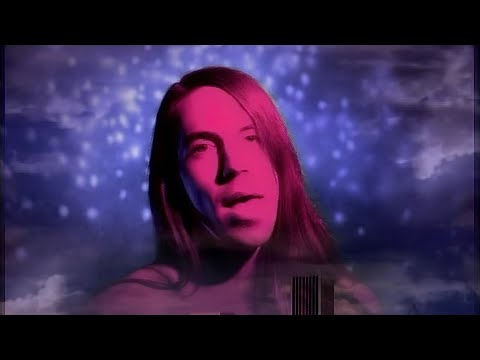
To recreate the iconic “Under the Bridge” shift, you have to transition from a lonely, dry vocal into a massive, gospel-inspired wall of sound. In AI prompting, this requires a staged entry where you call for the choir and the rhythmic intensity simultaneously.
LYRICS BOX
[Break]
[Driving Alt-Rock, Soulful Gospel Influence]
[Instrumentation: Clean Electric Guitar, Syncopated Bass, Dry Drums]

[Call-and-Response Bridge]
[Vocals: Lead Male, Emotional and Raw]
[Background Vocals: Layered Female Choir, Gospel Harmonies, Distant]
Under the bridge downtown
Is where I drew some blood
(Under the bridge downtown)
I could not get enough
(Under the bridge downtown)
Forgot about my love
(Under the bridge downtown)
I gave my life away
(I gave my life away!)


[Crescendo]
[High Energy, Overdriven Guitar Stabs]
[Vocals: Full Choir Anthemic Peak]
Yeah! Yeah! Yeah!
No, no, no, no!- The Call and Response Bridge: In Suno, using parentheses for the choir lines while keeping the lead vocal outside of them forces the AI to create that stereo width where the lead stays center and the gospel response stays wide.
- The Rhythmic Reset: The transition in “Under the Bridge” is famous for the drums finally driving the song home. Use the
[Instrumentation: Syncopated Bass]tag to ensure the AI moves away from the floating, ambient feel of the verses and into a locked-in rhythm. - The Outro Transition: In the original track, the Bridge doesn’t go back to a Chorus; it bleeds directly into a soulful fade-out. To recreate this, follow the bridge immediately with:
[Outro: Melodic Guitar Outro, Fading Choral Harmonies]
The magic of this Bridge isn’t just the volume; it’s the Choral Stacking and the shift from a straight feel to a driving 4/4 soul-rock Groove. Here’s the Styles Box if you’re looking to replicate the sound.
STYLES BOX
1990s Alternative Rock, Clean Electric Guitar Arpeggios, Funk-Rock Melodic Bass, Soulful Male Vocals, Organic Percussion, Gospel Choir Finale, Dynamic Build, Cinematic Melancholy, Raw Studio Production, 85 BPMAI Music Genres that Often Use Bridges
The Bridge tag works best in genres that need a fresh perspective before the song heads into the final Chorus or the grand finale. While many types of songs use Bridges, we chose these because they get the best results from Suno.
Here are some of them.
Alternative Rock & Grunge
In Alt-Rock, the Bridge is often used as a controlled explosion or a sudden drop into melancholy. It’s the section that breaks the Verse-Chorus-Verse cycle to offer a raw, unpolished perspective before the final anthem kicks in.
- Why it works: These genres thrive on dynamic contrast. A moody, stripped-back Bridge makes the final wall of guitars in the last Chorus feel massive and earned.
- Tag strategy: Use
[Bridge]paired with[Distorted Bass]or[Clean Melodic Break]to force a shift in texture that resets the listener’s ear.
R&B and Neo-Soul
In R&B, the Bridge is the vocal playground. It’s where the singer moves away from the established melody to experiment with riffs, runs, and complex chord changes that pull at the listener’s heartstrings.
- Why it works: It provides a necessary detour from the repetitive groove of the track, allowing for a peak emotional moment that builds anticipation for the song’s resolution.
- Tag strategy: Combine
[Bridge]with[Vocal Runs]or[Soulful Vocal Ad-libs]to encourage the AI to move beyond the standard melody and show off more technical vocal range.
Electronic Dance Music (EDM)
In the electronic world, the Bridge often functions as the deep breath. It’s a Breakdown section that strips away the kick drum to focus on atmospheric pads or a lone vocal before the final Build to the biggest Drop of the song.
- Why it works: It resets the energy clock. By removing the heavy percussion, you create a vacuum of sound that makes the eventual return of the beat feel twice as powerful.
- Tag strategy: Use
[Bridge]followed by[Atmospheric Synth Pads]to clear the stage for the final energy ramp.
Musical Theater & Power Ballads
The Bridge in a ballad is the Point of No Return. It’s where the narrative reaches its highest stakes, often modulating to a higher key or increasing the orchestral density to create a sense of grand scale.
- Why it works: It provides the theatrical lift required for a climax. This section is designed to be the song’s most memorable emotional realization.
- Tag strategy: Try using
[Bridge]with[Orchestral Swell]or[Crescendo]to push the AI toward a cinematic, high-intensity performance.
Beyond the Bridge
Next Steps: Engineer the Resolution
The Bridge is a tension-builder, and that tension demands a specific type of resolution. It sets the stage for your track’s final act. Depending on your song’s emotional goal, here is where you head next:
For the High-Octane Climax: Move to the Solo Tag Library. A Bridge often acts as the perfect runway for a guitar or synth Solo, providing the structural shift needed before the instruments take full control.
For the Ultimate Payoff: Head to the Chorus Tag Library. This is the most common destination; use the energy built during the Bridge to launch directly into the loudest, most intense version of your final anthem.
For the Atmospheric Fade: Explore the Outro Tag Library. In experimental or cinematic tracks, the Bridge can serve as the final peak before the song begins its descent, fading away into a professional finish.
⚠️ WARNING: Bridges NEVER lead into a Verse. Don’t try it. You’ll break the entire track.
Feeling overwhelmed by all the options?
Don’t sweat the theory. If you’ve got a specific artist or mood in mind, let Vibe-to-Tag engineer the perfect Suno Lyrics tags and complete Styles box for you instantly.
One click, zero stress.